

Electrical Panel Findings: Questions to Ask a Licensed Electrician
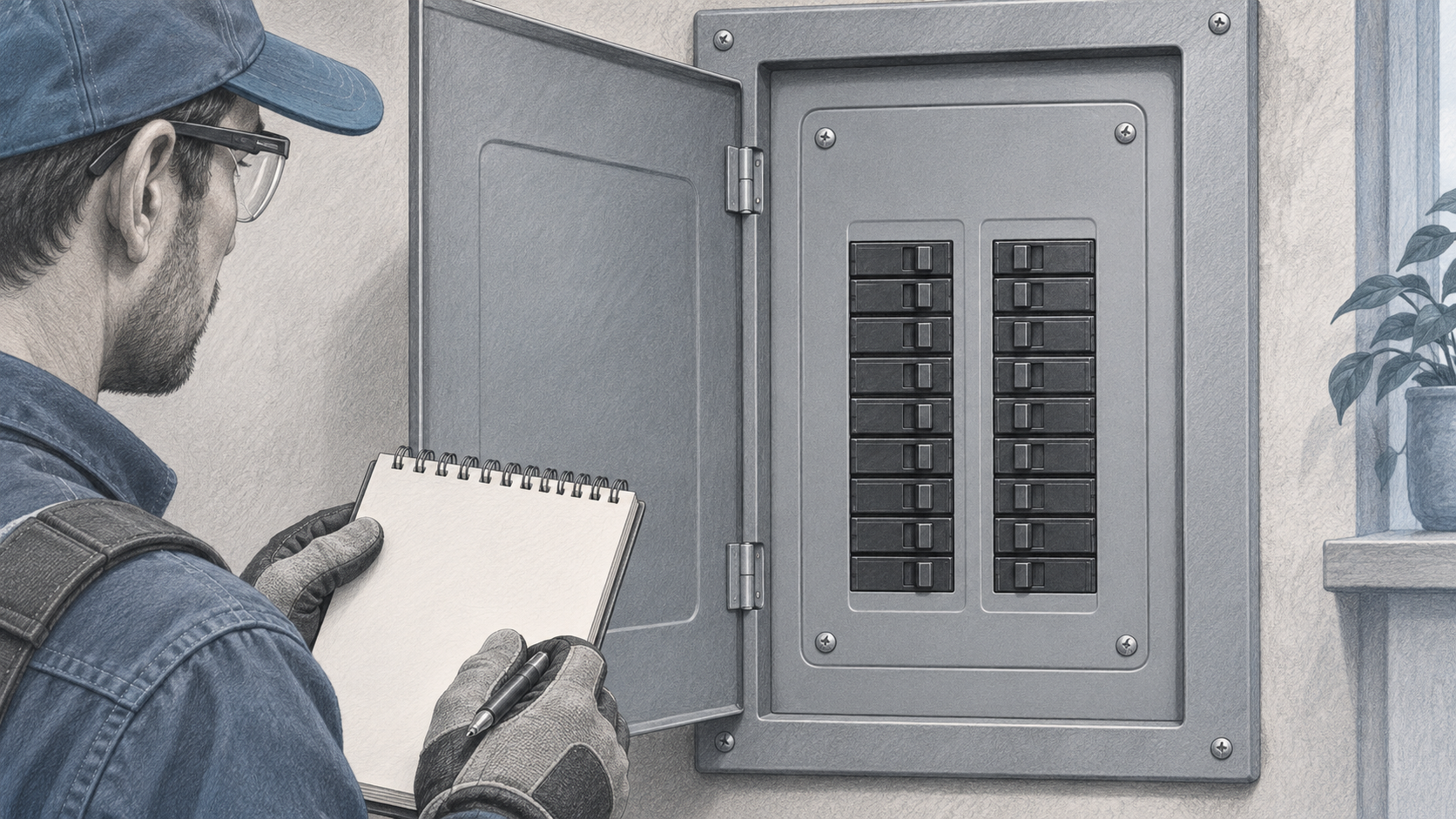
An electrical panel finding should lead to a clear professional response, not a do-it-yourself experiment. For an Independence buyer, the useful questions concern the observed condition, the affected equipment and the work needed to assess and repair it. A serviceable-looking cover or a neatly printed circuit directory cannot establish the condition of every connection or circuit behind it.
Keep owner access separate from professional inspection
Do not remove a panel cover, touch wiring or attempt a live electrical test to understand a report. Opening equipment can expose energized parts. The inspector determines whether the equipment can be inspected safely, and a licensed electrician is the appropriate person to assess and repair electrical concerns. An inaccessible or unsafe panel may require a separate professional visit.
Before the appointment, arrange ordinary access to the panel location. Move stored belongings only when it is safe to do so, without disturbing the equipment or its wiring. Tell the inspection company about a known operating restriction, water concern or other condition affecting access. Do not repeatedly reset a tripping device or energize equipment that someone has instructed should remain off.
Read the finding as a description of a particular condition
The report may describe a concern with the cabinet, a visible connection, labeling, a component or an operating limitation. These are not interchangeable. Retain the exact report reference and associated photographs when requesting the electrician’s assessment. A message saying “the panel failed” can hide which condition the inspector actually observed and which parts were not evaluated.
Ask the inspector to clarify unfamiliar terminology. For example, you may need to understand whether a comment concerns the protective enclosure or a connection observed inside it. Clarifying the location and observation does not require you to diagnose the repair. The electrician can use that information to assess the installation and determine the appropriate work.
Ask what the electrician’s proposal includes
Give the electrician the relevant report pages and ask for a written scope. Does the proposal address the specific finding, include an evaluation of related accessible equipment or identify further investigation? If a replacement is recommended, ask the electrician to explain why the proposed work is appropriate for the actual installation rather than assuming every panel comment requires the same response.
Keep a component repair, a panel replacement and an electrical service change separately described. They can involve different work and coordination. Ask who will manage any required utility involvement and applicable approvals. Do not assume that a proposal covering a cabinet also includes every connected circuit, fixture or concealed cable throughout the house.
Distinguish identification from verification
A circuit directory helps people identify the intended use of a circuit. It does not establish that every label is accurate or that every connected device has been evaluated. If the report identifies unclear or missing labeling, request that the electrician assess and correct it as part of the appropriate scope. Do not rely on a handwritten note as your only verification before work.
Similarly, an equipment label or apparent age provides information about what is installed. It is not a complete performance assessment. Ask the electrician which identifying information was confirmed and which conclusions come from evaluating the actual condition. Keep model or installation records provided by the contractor with the property’s other equipment documents.
Treat water-related observations as a separate concern
If a report notes moisture, corrosion or evidence of water near electrical equipment, provide that information to the electrician and the professional evaluating the water source. A new cover or replaced component does not, by itself, explain how the moisture condition will be addressed. Ask how the work responds to both the affected equipment and the underlying concern.
Do not approach or touch wet electrical equipment to photograph it. Explain the observed location from a safe position and obtain appropriate help. Where more than one trade is involved, retain the separate assessments so it is clear who evaluated the electrical installation and who addressed the moisture source. Avoid letting the issue disappear between unrelated proposals.
Keep completion evidence specific
After work, obtain an invoice or other record that identifies the equipment and corrections performed. Keep any applicable inspection or approval documentation supplied for that work. A generic receipt for “electrical repairs” can leave uncertainty about whether the original report item was included. Match the completed work back to its report reference.
If you arrange a repair verification visit, explain which original items you want reviewed and provide the contractor’s documents. Ask what can be observed safely and what remains concealed or outside that visit. A visual follow-up does not replace the electrician’s responsibility for the work or establish the condition of every circuit in the home.
The goal is an understandable chain from observation to professional assessment to documented correction. That is more useful than attempting to turn a home inspection report into an electrical repair manual.
Review Metro One’s home inspection service information when arranging a home inspection. Share known access or operating restrictions in advance, and have electrical defects assessed and repaired by a licensed electrician.
Comments
Post a Comment